

Boiler Failure Due To Hydrogen Damage
Poor design or inadequate materials selection can lead to long-term overheating in boiler tubes. This can occur due to factors such as inadequate consideration of temperature and pressure conditions, or improper material selection.Boilers are vital components of various industries, providing heat and power generation. However, they are susceptible to failures and corrosion risks that can compromise their efficiency, safety, and longevity. It is crucial to have a comprehensive understanding of these issues to prevent costly breakdowns, downtime, and potential hazards. Boiler failures can occur due to multiple factors, including hydrogen damage, caustic gouging, oxygen attack, thermal fatigue, and flow-assisted corrosion. Each of these mechanisms poses unique challenges and requires specific preventive measures. HYDROGEN DAMAGE: Hydrogen damage in boilers refers to a type of corrosion caused by the presence of hydrogen gas. ✔️ Process When hydrogen gas enters the boiler system, it can react with the metal surfaces, leading to degradation and weakening of the materials over time. ✔️ Result This can result in cracks, embrittlement, and ultimately, failure of the boiler tubes. ✔️ Generation Mechanism Hydrogen damage is a significant concern in high-temperature environments, particularly in boilers where hydrogen can be generated through various mechanisms, such as steam decomposition or chemical reactions involving fuels or water. Damages: a) Thick-lipped Thick-lipped damage refers to the formation of raised lips or edges along the fracture surface of boiler tubes caused by hydrogen damage. This type of damage typically occurs due to hydrogen-induced cracking, where hydrogen gas diffuses into the metal and promotes the formation of cracks. Over time, the cracks grow and eventually result in thick-lipped fractures, which can be visually observed as raised edges or lips along the fracture surface. b) Brittle Appearance When hydrogen penetrates the metal structure, it can cause embrittlement, making the material more prone to fracture. This embrittlement can result in a distinct brittle appearance of the affected areas. Instead of displaying ductile or flexible characteristics, the material appears more rigid and prone to sudden failure. c) Window Section Blown Out This refers to the occurrence of localized ruptures or blowouts in the affected boiler tube sections. As hydrogen-induced cracks propagate and worsen, they can eventually reach a critical point where the pressure inside the tube causes a rupture, leading to the expulsion or blowing out of a section, creating a visible window-like opening. PREVENTIVE MEASURE: Preventive measures against hydrogen damage in boiler tubes involve implementing various practices to minimize the risk of hydrogen ingress and mitigate its detrimental effects. Here are some key preventive measures. ✔️ Deaeration Effective deaeration systems should be in place to remove dissolved gases, including oxygen and hydrogen, from the feedwater. Deaeration helps minimize the amount of hydrogen that can potentially enter the boiler system. ✔️ Material Selection Choose appropriate materials for boiler tubes that are resistant to hydrogen damage. Select materials that have a high tolerance for hydrogen exposure and possess suitable mechanical properties to withstand the operational conditions. ✔️ Hydrogen Monitoring Regularly monitor the concentration of hydrogen gas within the boiler system using appropriate monitoring techniques. Early detection of increased hydrogen levels can prompt proactive measures and prevent extensive damage. ✔️ Maintenance and Inspections spections Conduct regular inspections and maintenance activities to identify potential sources of hydrogen generation and address any existing damage promptly. This includes inspecting for leaks, addressing water chemistry issues, and assessing the integrity of boiler tubes. ✔️ Operational Control Optimize boiler operating parameters, such as temperature and pressure, to minimize the potential for hydrogen damage. Proper control and monitoring of operational conditions can help mitigate the risk of hydrogen-related issues. ✔️ Training and Education Ensure that operators and maintenance personnel are well-trained and knowledgeable about hydrogen damage prevention. Provide education on best practices, safety protocols, and the significance of proactive measures. CONCLUSION: In conclusion, understanding boiler failures and corrosion risks is crucial for maintaining the efficiency, safety, and longevity of boiler systems in various industries. Among the different mechanisms that contribute to boiler failures, hydrogen damage poses a significant concern, resulting in cracks, embrittlement, and failure of boiler tubes. Solarkaz provides its expertise to the clients by implementing the preventive measures, industries can minimize the risk of hydrogen damage, ensuring the safe and efficient operation of boiler systems, reducing downtime, and preventing costly breakdowns. Solarkaz through its continuous vigilance, and proactive measures, can safeguard boilers against hydrogen damage and extend their lifespan, enabling uninterrupted heat and power generation while maximizing the potential of these vital components. You can contact us for having a deep understanding on Hydrogen Damage.

Prevent Boiler Tube Overheating Failures
Overheating in boiler tubes occurs when the temperature of the tubes increases beyond the recommended operating temperature for an extended period of time. This can be caused by several factors, including poor combustion, insufficient cooling, inadequate water treatment, or other operational problems. When boiler tubes overheat, their material strength can decrease, leading to deformation, cracking, and eventual failure. Two main types of overheating can occur in boiler tubes: 1. Short-term2. Long-term overheating A) Short-Term Overheating Occurrence It occurs when the temperature of the tube exceeds the recommended operating temperature for a short period, typically due to a sudden increase in heat input or a decrease in cooling flow. Results This type of overheating can result in the following issues: 1. Thin-Lipped, Longitudinal Rupture: This occurs when localized overheating causes a weakened area of the tube to rupture along its length, resulting in a thin-lipped, longitudinal rupture. This type of rupture can be caused by issues such as flame impingement, overheated refractory, or blocked cooling water. 2. Extensive Tube Bulging: This occurs when localized overheating causes the tube to expand beyond its normal diameter, resulting in extensive tube bulging. This type of bulging can be caused by issues such as restricted water flow, inadequate cooling, or flame impingement. 3. Large Fish-Mouth Appearance: This occurs when the tube end opens up like a fish’s mouth due to pressure build-up caused by localized overheating. This type of appearance can be caused by issues such as blocked cooling water, insufficient water flow, or overheated refractory. Causes There can be several typical causes of short-term overheating in boiler tubes, including: 1. Flame Impingement: This occurs when the flame comes in direct contact with the tube surface, causing localized overheating and potential damage. 2. Blocked Cooling Water: This can occur when the cooling water is blocked or restricted, reducing the cooling effectiveness and causing localized overheating. 3. Inadequate Cooling: This can be caused by issues such as low cooling water flow or insufficient cooling water velocity, resulting in localized overheating. 4. Overheated Refractory: This can occur when the refractory material surrounding the boiler tubes becomes overheated, causing localized overheating and potential damage to the tubes. 5. Fouling or Scaling: This occurs when deposits such as mineral scale or corrosion products build up on the tube surface, reducing heat transfer and potentially causing localized overheating. B) Long Term Overheating Occurrence Long-term overheating occurs when the temperature of the tube is consistently higher than the recommended operating temperature over an extended period. Results This type of overheating can result in the following issues: 1. Little to Moderate Bulging: Long-term overheating can cause gradual deformation of the tube, resulting in little to moderate bulging. This can occur due to factors such as inadequate cooling, high-temperature gradients, or insufficient tube wall thickness. 2. Little to Moderate Reduction in Wall Thickness: Long-term overheating can also cause a gradual reduction in the thickness of the tube wall due to thermal degradation. This can occur due to factors such as exposure to high temperatures or corrosive gases. 3. Typically accompanied by thermal oxidation: Long-term overheating can lead to thermal oxidation, a chemical reaction that occurs when metal is exposed to high temperatures and oxygen. This can cause further degradation of the tube material and increase the risk of failure. 4. Found in Superheaters, Reheaters, Waterwalls: Long-term overheating is typically found in components such as superheaters, reheaters, and waterwalls, which are exposed to high temperatures and pressures over long periods of time. These components are crucial for efficient boiler operation, and their failure can lead to costly downtime and repairs. Causes There can be several typical causes of short-term overheating in boiler tubes, including: 1. Insufficient Cooling: This can occur due to factors such as low cooling water flow rate, high water velocity, or inadequate cooling surface area. Over time, this can lead to a gradual increase in tube wall temperature and degradation of the tube material. 2. Inadequate Tube Wall Thickness: Tubes with insufficient wall thickness are more susceptible to long-term overheating due to their reduced ability to dissipate heat. This can occur due to factors such as inadequate design, corrosion, or erosion. 3. High Temperature Gradients: Large temperature differences between the tube wall and the surrounding fluid can cause thermal stresses that lead to long-term overheating. This can occur due to factors such as uneven heat distribution or changes in operating conditions. 4. Corrosive Gases: Exposure to corrosive gases such as sulfur dioxide, hydrogen sulfide, or chlorine can lead to gradual degradation of the tube material over time, increasing the risk of long-term overheating. 5. Design Issues: Poor design or inadequate materials selection can lead to long-term overheating in boiler tubes. This can occur due to factors such as inadequate consideration of temperature and pressure conditions, or improper material selection. Conclusion In conclusion, preventing boiler tube failures caused by overheating is crucial for ensuring safe and efficient boiler operation. It requires identifying and addressing the various causes of short-term and long-term overheating. As a leading provider of innovative and high-quality boiler solutions, Solarkaz International understands the importance of proactive maintenance and monitoring to prevent overheating and tube failures. By implementing best practices and leveraging the latest technologies, Solarkaz International helps its clients minimize downtime, increase reliability, and extend the lifespan of their boiler systems.
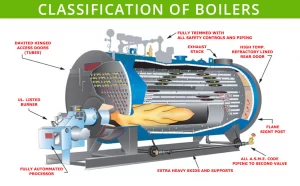
Classification of Boilers Based on Circulation Mechanism
Boilers are essential pieces of equipment used in various industries for generating steam or hot water for various purposes. There are different types of boilers classified based on their design, fuel source, and operating principle. Forced circulation and induced circulation boilers are two such types of boilers that differ in their circulation mechanism. In this blog, we will discuss the differences between a forced circulation boiler and an induced circulation boiler. Forced Circulation Boiler: In a forced circulation boiler, The circulation of water is achieved by using a pump to force the water through the boiler’s heat transfer surfaces. The pump ensures that there is a constant flow of water through the boiler, which helps to maintain a uniform temperature throughout the boiler for efficient boiler operation. Forced circulation boilers are typically used in high-pressure and high-temperature applications where a large amount of heat needs to be transferred. One of the primary advantages of forced circulation boilers is that they can generate steam quickly and efficiently. This is because the constant flow of water through the boiler helps to transfer heat rapidly, and the pump ensures that there is no stagnant water in the boiler. It is also necessary to have a deep knowledge of correct water temperatures so that the boiler could function properly. Maintaining the correct water temperature inside boiler is essential to prevent corrosion. Forced circulation boilers are also relatively compact and require less space compared to other types of boilers. The high flow rates of water required in these boilers make them more susceptible to erosion, corrosion, and scaling. This can lead to reduced efficiency, increased maintenance costs, and potentially, premature failure of the boiler. The use of a pump in forced circulation boilers can increase the power consumption and operating costs of the system. Induced Circulation Boiler: In an induced circulation boiler, the circulation of water is achieved by using a steam-driven or electrically driven pump to induce a flow of water through the boiler. The pump draws water from the boiler’s drum and forces it through the boiler’s heat transfer surfaces before returning it to the drum. The steam-driven pump is powered by the steam generated by the boiler, while the electrically driven pump is powered by an external power source. One of the primary advantages of induced circulation boilers is that they are more resistant to scaling, erosion, and corrosion compared to forced circulation boilers. This is because the flow rate of water in these boilers is relatively low, which helps to reduce the risk of these issues. Induced circulation boilers can operate at lower pressures and temperatures compared to forced circulation boilers, which can help to reduce the cost of the system. The use of a pump to induce the flow of water through the boiler can increase the risk of pump failure, which can lead to a loss of circulation and potentially, overheating of the boiler. The lower flow rates of water in these boilers mean that they may take longer to generate steam compared to forced circulation boilers. Conclusion: In summary, forced circulation and induced circulation boilers differ in their circulation mechanism. Forced circulation boilers use a pump to force water through the boiler’s heat transfer surfaces, while induced circulation boilers use a pump to induce a flow of water through the boiler. Each type of boiler has its advantages and disadvantages, overall, the choice between forced circulation boiler and induced circulation boiler depends on various factors such as the required flow rate, pressure, temperature, the risk of scaling, erosion, and corrosion, and the specific application’s requirements. Consultation with a professional engineer or boiler expert like Solarkaz International is recommended before choosing the right boiler for a particular application
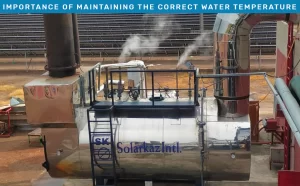
Importance of Maintaining the Correct Feed Water Temperature for Safe and Efficient Boiler Operation
Boilers are an essential component of any steam-based industrial system, as they provide the necessary heat to generate steam for various applications. Boiler feed water is an integral part of any steam boiler system, as it not only helps to produce steam but also plays a crucial role in maintaining the health and longevity of the boiler. One of the critical aspects of maintaining feed water is keeping it at a specific temperature when it enters the boiler after flushing or cleaning. In this blog post, we’ll explore the reasons why maintaining the correct feed water temperature is essential and why it’s critical for the efficient and safe operation of the boiler. 1. Efficiency of the Boiler One of the most significant reasons why maintaining the correct feed water temperature is essential is because it affects the efficiency of the boiler. The temperature of the feed water can have a significant impact on how hard the boiler has to work to maintain its temperature. If the temperature of the feed water is too low, it can cause the boiler to work harder, which can lead to decreased efficiency and increased energy consumption. For instance, let’s say the feed water temperature is 50°F, and the boiler requires 212°F steam to perform its task. In this scenario, the boiler would have to work harder to heat the water to its required temperature. However, if the feed water temperature is already 120°F, the boiler would not have to work as hard to heat the water to the required temperature, leading to increased efficiency. 2. Thermal Shock Prevention Another critical reason why maintaining the correct feed water temperature is essential is to prevent thermal shock to the boiler. Thermal shock occurs when there is a sudden change in temperature within the boiler, which can cause the metal to expand and contract rapidly. This can lead to stress on the metal, which can result in damage or failure of the boiler. Maintaining the correct feed water temperature can help prevent thermal shock by ensuring that the temperature of the water entering the boiler is not too different from the temperature of the water already present in the boiler. This prevents sudden changes in temperature, which can lead to thermal shock 3. Corrosion Prevention Maintaining the correct feed water temperature is essential to prevent corrosion within the boiler. If the feed water temperature is too low, it can cause the metal to corrode more quickly, leading to leaks and other issues. Boiler inspections help prevent catastrophic failures by identifying and rectifying these types of issues. It is necessary for the boiler owner to have timely inspections of their boiler to ensure that it is functioning correctly and efficiently. Corrosion occurs due to the presence of dissolved oxygen in the feed water. When the water temperature is low, the oxygen in the water dissolves more readily, leading to increased corrosion. However, by maintaining the correct feed water temperature, the oxygen content of the water can be reduced, thus reducing the likelihood of corrosion. Conclusion In conclusion, maintaining the correct temperature of the feed water when it enters the boiler after flushing or cleaning is essential to ensure the efficient and safe operation of the boiler. It helps prevent thermal shock, corrosion, and maintains the efficiency of the boiler. Therefore, it is crucial to ensure that the temperature of the feed water is maintained at the appropriate level. Do you want to know more about Importance of Maintaining the Correct Feed Water Temperature? Contact us to know more about the controlling process of logistics. #solarkaz #solarkazinternational #importanceofmaintainig #Efficiency of the Boiler #Thermal Shock Prevention #Corrosion Prevention

Transportation of Goods
Definition The process of moving any equipment from one point to another is defined as transportation. It includes safe, efficient, reliable, and sustainable movement of goods over time. Transportation Role in Logistics Transportation takes a crucial part in the logistics operation. The quick, responsive, and on-time operation of transportation determines the efficiency of moving products. The progress in techniques and management principles improves the moving load, delivery speed, service quality, and operation costs. A healthy transportation system within a country is beneficial in combating bad circumstances by providing timely help in terms of charity work. It is also the corporate social responsibility of organizations to maintain a sustainable transportation system based on renewable energy sources to avoid pollution. Importance of Transportation No equipment deliverables are possible without transportation; hence transportation is a basic core of Logistic operation as well: Without well-developed transportation systems, logistics could not bring its advantages into full play. The On-time transport systems in logistics activities could provide better logistics efficiency, reduce operation costs, and promote service quality. A well-managed logistics system could increase both the competitiveness of the government and enterprises. Principles of Transportation Types of Transportation Rail Transport Advantages Convenient for travelling long distances. Relatively faster than road transport. Suitable for carrying heavy goods in large quantities over a long distance. Less affected by adverse weather conditions like rain, floods, fog, etc. Limitations Relatively expensive for carrying goods and passengers over short distances. Not available in remote parts of the country. Provides service according to fixed time schedule and is not flexible for loading or unloading of goods at any place. Road Transport Advantages Relatively cheaper mode of transport as compared to other modes. Goods can be transported at a faster speed by road carriers over a short distance. Flexible mode of transport as loading and unloading is possible at any destination. It can provide door-to-door service. Limitations Limited carrying capacity. Road transport is not economical for long-distance transportation of goods. Transportation of heavy goods in bulk by road involves high costs. Water Transport Advantages Relatively economical mode of transport for bulky and heavy goods. Safe mode of transport with respect to the occurrence of accidents. It promotes international trade. Disadvantages The depth and navigability of rivers and canals vary and thus, affect the operations of different transport vessels. It is a slow-moving mode of transport. It is adversely affected by weather conditions. Air Transport Advantages Fastest mode of transport. Very useful in transporting goods to the area which are not easily accessible by any other means. Most convenient mode of transport during natural calamities. Disadvantages Relatively most expensive mode of transport. Not suitable for transporting heavy and bulky goods. Affected by adverse weather conditions. Not suitable for short-distance travel. In case of accidents, it results in heavy losses of goods, Problems Related to Transportation Financing Congestion of routes Infrastructure issues Safety of personnel & equipment Goods weight Height of equipment Local Regulations Country political conditions Weather conditions Transport Costing The following factors are considered during transportation costing: Minimum Weights Loading and unloading locations Packaging Damage in Transit Services charges Insurance Cost Conclusion Transportation and Logistics systems have interdependent relationships in that logistics management needs transportation to perform its activities meanwhile, a successful logistics system could help to improve the traffic environment and transportation development. Since transportation contributes the highest cost among the related elements in logistics systems, the improvement of transport efficiency could change the overall performance of the logistics system. Transportation plays an important role in logistics system and its activities appear in various sections of the logistics processes. With0ut the linking of transportation, a powerful logistics strategy cannot bring its capacity into full play. Solarkaz International provides different industrial equipment including water treatment plants, Boilers, and Heat Exchangers and provides transportation of these equipment to the local and international market and industries. Solarkaz also provides different services including testing and calibration of pressure vessels, heat exchangers, fuel oil tanks, storage tanks and boilers etc. Do you want to know more about the transportation of Goods? Contact us to know more about the controlling process of logistics. #transportation #Roadtransport #Airtransport #Watertransport #solarkaz #solarkazinternational

How Solarkaz Is Serving Pakistan Under Its Corporate Social Responsibility
Solarkaz aims to empower women. But How? Businesses that engage in corporate social responsibility work to better the environment, the economy, and local communities. Corporate social responsibility, or CSR, is a type of self-regulation that demonstrates a company’s accountability and commitment to advancing the social and environmental well-being of communities and society. The four different CSR initiatives that a corporation might use are volunteer work, charitable work, ethical labor practices, and environmental initiatives. This article is for demonstrating to our customers how Solarkaz International maintains high standards of corporate social responsibilities. The success of a company does not count only on extended profitability, pace of expansion, and brand awareness; this is not the only way by which customers, employees, and other stakeholders evaluate a company today. Other factors also count in the success of a company and among the important factors, CSR is one. Almost half of all consumers are turning to brands to set an example for improving the world. Not just customers anticipate this; according to a Glassdoor survey. 75% of employees between the ages of 18 and 34 do as well. Businesses today are held to enormous levels of responsibility and influence. Solarkaz not only understands this but is taking continuous steps for developing strategies to implement CSR, considering it as its ethical responsibility. How Solarkaz Is Implementing CSR? Environment Protection Agency Code of Conduct The Pakistan Environmental Protection Agency is an executive agency of the Government of Pakistan managed by the Ministry of Climate Change. The agency is charged with protecting human health and the environment by writing and enforcing regulations based on laws passed by Parliament. Solarkaz completely complies with all the local requirements of the Pakistan Environment Protection Agency. How are we doing that? Being well aware of the damages that the flue gasses from the boiler could cause to the environment, we don’t release the waste flue gasses directly into the open atmosphere, Instead, we use cyclone filters to filter out all the NOx and SOx-generating elements and flush them out through proper channel from the boilers. Also, we provide economizers in our boilers which take up the heat from the flue gasses for pre-heating the water. Through this, we are also reducing the need for fuel which is potentially helpful for the environment as well. Protecting The Environment By Avoiding Wood Cutting Our environment is too much affected by wood cutting because forests play an important role in reducing the greenhouse effect and purifying the environment. Using wood as fuel for our Boilers is damaging our forests, and ultimately our environment. Solarkaz plays an important role in this regard to bridge the gap and is providing the fuel which is obtained from the leftover after harvesting of crops, hence mitigating the need to cut down the forests for using it as fuel for Boilers. Women Empowerment Solarkaz aims to empower women. But How? Usually in rural areas, farming and harvesting are done by women. While harvesting it is seen that the leftover material like husks, stalks and leaves are of no use to farmers, but they are a potential source of fuel for Bio-Mass boilers. So, Solarkaz provides rural areas women with the opportunity to earn money by selling those leftovers to the nearby facilities of Solarkaz. This helps them develop financially. Volunteer & Charitable Work Solarkaz understands the responsibility for providing Charity and voluntary services whenever it is needed. In the recent flood situation in Pakistan due to the heavy monsoon rainfall, when approximately more than half of Pakistan was suffering from the crises of Shelter and Food supply. Solarkaz came forward and put up its role in providing Shelter and Food to needy families who have potentially lost their homes during this situation. For this, we collaborated with different government bodies as well. Solarkaz helped flood-affected areas of Khairpur Sindh, along with the Lal Baagh foundation because we believe in helping and building communities in the time of need as our CSR. Conclusion As the world is moving towards low carbon emission solutions, more focus is being transferred towards the role of companies in understanding and implementing their role in entertaining social responsibility. Solarkaz‘s advanced tech will help you in achieving the desired goal. As part of its corporate social responsibility, Solarkaz is actively serving Pakistan by contributing to various social causes. In addition to its commitment to the community, Solarkaz ensures efficient transportation of goods, guaranteeing timely and secure delivery. Let’s explore how Solarkaz combines its CSR initiatives with reliable transportation services for a positive impact. Contact us to know more about the role we are playing to fulfill our corporate social responsibility