

Why Prefer Solarkaz for Biomass Boilers?
Certified Boiler Manufacturer Solarkaz is a certified manufacturer of Boilers, Pressure Vessels & Heat Exchangers. It has local licenses from the Ministry of Industries & Ministry of Explosives, and from International organizations like the American Society of Mechanical Engineers (ASME), the National Board of Boiler and Pressure vessel inspection (NBBI), the American Welding Society (AWS) and ISO 9001, 14001, 45001 certifications. In Pakistan, it is the only certified Boiler Manufacturer complying with all the local and international requirements for the manufacturing of Boilers specifically Solid fuel fire boilers. Beware of Unauthorized and Illegal Boiler Alteration Shops Everyone must have the market knowledge of the local manufacturers to know why their fabricated Boilers are dangerous. Some of the reasons are given below: No internal or external audits of their fabrication facilities. Having no certifications from international organizations, hence they don’t follow the safety fabrication protocols and standards. Re-using the old material for Boiler fabrication is extremely dangerous for the facilities. Mostly consuming the used pressure vessels and converting them into the Biomass boilers. Not efficient fuel quality used for Biomass boilers. (Only conventional fuels e.g: wood logs that are hazardous for environment. etc.) No warranties and aftersales services for boilers. Benefits of Using Solarkaz Biomass Boiler Over Local Market Boilers Using Solarkaz products has the following benefits: Solarkaz is an internationally certified Boiler manufacturer, several International and Locals audits are being conducted within the fabrication facility to maintain the updated market standards. Solarkaz only uses new and fully tested materials for the fabrication of our Biomass boilers. We also provide our customers with the respective MTCs of the fabrication material for their ready reference. Our Biomass fuel is very efficient, cost-effective and environmentally friendly than the other conventional fuels in the market. Biomass fuel includes Biomass Pellet, wood, Waste Cloth, Rice Husk, Peanut Shell Bagasse, Bamboo Chip Mustard Stalk, Wood Chip, cotton seed, corn cob, Cotton Stalk, etc. We provide a separate cyclone filter in our Biomass boiler design, which enables the system to filter exhaust gasses from the boiler by reducing SOX and NOX emissions, making it environment-friendly as per local & international standards. Solarkaz also provides unmatched warranty for its Biomass Boiler. Solarkaz Biomass boilers are up to 89% efficient. We claim that 310 Kg of our Biomass fuel can produce up to 1 ton of steam. Solarkaz Solutions for Biomass Boiler Our Business model for Biomass boilers is as follows: Turnkey Solution Model: Turnkey solutions are solutions that are completely deployed in a business, effectively fulfilling the need of the client and the client can simply “turn the key” to get started. Solarkaz provides Turnkey solutions for Biomass Boilers to our clients. Offerings In the turnkey solution model clients get the following benefits from Solarkaz: ✔️ Survey and feasibility visit of client site ✔️ Design & Fabrication of Bio-Mass (Boiler) Package. ✔️ Transportation and Installation of Bio-Mass (Boiler) Package to the site. ✔️ Training of the staff members for proper operation of the Bio-Mass (Boiler) Package. Operations Model: Build Operate Transfer (BOT) Model: BOT is a model that is a contractual relationship in which the client hires Solarkaz to fabricate, set up, optimize, and run Biomass Boilers on their facility. Within this model Solarkaz has contractually stipulated intent of transferring the operation to the organization as a captive center. The instalment period would be 3 Years. RentalIn this model, Solarkaz offers a mutual contract with the client on the consumption/utilization/selling of steam. Initial investment cost could be mitigated through this model. Biomass Fuel Supply Model: This model is intended to supply Biomass boiler fuel only to any biomass boiler of the client. Conclusion Solarkaz is a certified boiler manufacturer having various local and international licenses for the quality manufacturing of boilers, pressure vessels, and Heat Exchangers. Local boilers can be dangerous for both business and human safety because of low quality and refurbished material usage. You can have several benefits by preferring Solarkaz biomass boilers which are mentioned above. As the world is moving towards low carbon emission solutions, Solarkaz ‘s advanced technology will help you in achieving the desired goal. Solarkaz offers multiple solutions and packages to satisfy any type of customer need with our new biomass boilers that are designed to operate at peak performance while providing high levels of efficiency. When it comes to biomass boilers, Solarkaz stands out as a preferred choice. Discover everything you need to know about biomass boilers, from their working principles to the benefits they offer. Explore why Solarkaz is the trusted provider for reliable and efficient biomass boiler solutions.
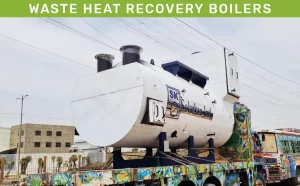
Applications, Advantages and Examples of Waste Heat Recovery Systems
What is waste heat? Waste heat is energy that is wasted to the environment and is not taken into use. What is waste heat recovery? The reuse of heat energy that would otherwise be wasted or will be released into the atmosphere, is known as “Waste Heat Recovery” What are the Examples of Waste Heat Recovery? Turbo Charged cars Economizers in Boilers Air Preheaters Regenerators Heat Exchangers Absorption Chiller Steam Thermocompression What are the uses of Waste Heat Recovery in Boilers? One of the most basic types of waste heat recovery are stack economizers, which are frequently used to heat water in Boilers. Heat energy from the gas released during the heating process in the boiler flue gas chamber is used by boiler stack economizers to heat the water that goes into the boiler, which lowers the energy needed to produce steam. The US Department of Energy claims that installing a boiler feed water economizer can increase a boiler’s thermal efficiency and decrease fuel usage by 5% to 10%. These boilers work by drawing heat from a hot fluid, usually a gas, that is created as a byproduct of a chemical reaction but has no inherent value as a chemical or that is the exhaust from a gas turbine or internal combustion engine. Boilers for heat recovery are frequently used in high temperature operations like the production of glass and steel What are the uses of Waste Heat Recovery in Boilers? The ideal option for any industry is Solarkaz waste heat recovery boiler systems. Waste heat systems allow heat that is released into the atmosphere to be recovered and used as extra energy for another operation. The need for more efficient and economical energy use grows as energy prices are rising, all over the world. To ensure long-term improvement of plant performance, quality, and productivity, Solarkaz proudly displays its knowledge in goods and services, amassed in this field over time, and offers a wide range of customized and standardized solutions for waste heat recovery. Every waste heat recovery system is specially developed to meet a particular need. Waste heat recovery systems offer a wide range of applications and advantages in industrial settings, and one effective method for heat exchange is the shell and tube heat exchanger. By understanding the principles of shell and tube heat exchangers, we can explore their practical examples and further appreciate their role in maximizing energy efficiency through waste heat recovery. What are the Advantages of using Waste Heat Recovery Boilers? Environment hence using waste heat recovery keeps waste gases at low temperatures Highest efficiency gain due to integrated economizers Utilities (requiring heat energy) can be utilized nearby these boilers Less use of fuel hence increasing the overall efficiency of the boiler Highly reliable in operation and robust in construction Quick payback returns are achieved Eco-friendlyEnergy which was earlier wasted is utilized. High Return on Investment The payback period for waste heat recovery boilers is less than 2 year, making them an excellent investment opportunity. Waste Heat Recovery Boiler Design According to the needs of the plant, waste heat recovery boilers are made to recover heat from waste flue gases from the exhaust, furnace exhaust, kiln exhaust, incinerator exhaust, etc. to produce steam or hot water. 4 basic parameters shall be considered for designing the waste heat recovery system in Boilers, which are: Type of fuel and its composition Amount of flue gases leaving the exhaust system The temperature of flue gases at exhaust Utilization of waste heat Water tube boilers that use the medium to high-temperature exhaust gases to generate steam include waste heat boilers like the two-pass boiler. There are several different capacities for waste heat boilers, allowing for high flows of gas intakes. Auxiliary burners or an afterburner can be installed to increase steam output when waste heat is insufficient to produce the appropriate levels of steam. Power generation or process heating are two uses for steam. An external superheater must be added to the system to produce superheated steam. Do you want to order a WHR boiler? Contact us to get a quote today!

Why Water Treatment Is Necessary?
What is Water Treatment? Any procedure that enhances the quality of water to make it suitable for certain end user is referred to as water treatment. The final use could be: ✔️Drinking✔️Irrigation✔️Maintaining river flow✔️Water enjoyment✔️Boilers✔️Heat exchangers To make the water suitable for the intended end use, water treatment involves: ✔️Removing pollutants like oil and different chemicals etc.✔️Unwanted components like dust, mud etc.✔️Reducing the concentration (In terms of ppm). Need For Water Treatment Water is a fundamental need for all living things. It must be pure and untainted. Enough though water covers: 71% of the earth’s surface Only about 1% of it is considered drinkable by international standards due to numerous contamination. Water treatment plays a crucial role in industrial operations, ensuring purity and protecting equipment. Additionally, implementing waste heat recovery systems offers numerous advantages, allowing businesses to harness and utilize valuable energy resources efficiently. Let’s explore how these two essential aspects contribute to sustainable and cost-effective industrial processes. The main causes of water pollution are: Industrial wastewater discharge Agricultural pollution, Municipal wastewater, Environmental changes, Global warming, Risks to human health, aquatic ecosystems, industrial equipment and the environment exist. The contamination of water causes severe losses to industrial equipment in terms of big disasters and certain property damages. Hence, water treatment is needed to address these issues. Water treatment helps not only in protecting human health but also it helps in protecting industrial equipment from damage. Need For Water Treatment Equipment Water Treatment: Focused on the removal of chemicals causing scale, corrosion and foaming within the equipment like boilers and heat exchangers. Water Treatment for Drinking: For making water drinkable, water is being treated to maintain a certain pH level within the water also a TDS level of water is maintained below 200 ppm. Water Treatment Steps Raw water can be: Groundwater Sea Water (1) Oxygen Scavanging Operation and maintenance of commercial boiler systems and steam-generating plants must address the serious problem of oxygen-related metallurgical corrosion. This can be achieved using carefully selected oxygen scavengers designed specifically for steam boiler corrosion control and feed water corrosion control in steam-raising plants. Oxygen scavengers are critical to preventing dissolved oxygen from causing corrosion (called oxygen pitting) in boilers. Mechanical deaeration should remove most dissolved oxygen, but chemical oxygen reduction (called scavenging) is required to provide optimum protection. Oxygen scavengers are designed to reduce (scavenge or destroy) dissolved oxygen, so they can not cause oxygen pitting. The optimum oxygen scavenger is based on system design and steam usage requirements. (2) Coagulation The initial stage of water treatment is coagulation. Positively charged chemicals are added to the water during coagulation. The negative charge of dirt and other dissolved particles in the water is balanced by the positive charge. When this happens, the particles and chemicals bond together to create somewhat larger particles. In this step, common substances include certain: Salts Aluminium Iron. (3) Flocculation Coagulation is followed by flocculation. Water is gently mixed to generate larger, heavier particles known as flocs through a process called flocculation. In order to aid in the formation of the flocs, water treatment facilities frequently add extra chemicals during this phase. (4) Sedimentation A typical method of treating water is sedimentation. It is a method for getting rid of solids in the water that float and settle. Larger particulates are removed from the process using sedimentation tanks. Sedimentation may be followed by further treatments. (5) Filtration The clean water on top is filtered to remove further solids from the water after the flocs have sunk to the bottom of the tank. The pure water goes through filters constructed of various materials and with various pore sizes during the filtration process (such as sand, gravel, and charcoal). These filters eliminate: Germs Dust Chemicals Parasites Bacteria Viruses. (6) Disinfection Water treatment facilities may add one or more chemical disinfectants such as: ✔️ Chlorine✔️ Chloramine✔️ Chlorine dioxide After the water has been filtered to eliminate any lingering parasites, bacteria, or viruses. Water treatment facilities make sure the water has low concentrations of the chemical disinfectant before it leaves the facility to help keep water safe as it goes to residences and commercial establishments. The remaining disinfectant eliminates bacteria that are present in the pipes that run from the water treatment facility to your tap. Conclusion Solarkaz International provides water treatment plants and chemicals to address the issues and challenges that normally industrial equipment face. Solarkaz provides the solution for water treatment by the fabrication of a water treatment plant. It also provides Acid inhibitors, hardness controllers, anti-scaling chemicals, oxygen scavengers, sludge condition chemicals and different anti foaming compounds for protecting industrial boilers from corrosion, scaling and pitting. Do you want protect your industrial equipment from corrosion, and scale formation? Contact us to know more about the water treatment system.
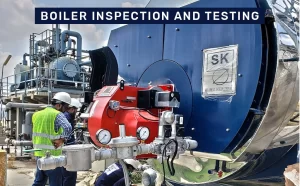
How to Prepare Your Boiler for an Inspection
For any industry that uses industrial boilers, boiler inspection is essential. Boilers often operate under extreme conditions of temperature and pressure due to which periodic inspection of boilers becomes necessary to avoid any damage. Without a proper inspection, a boiler is not only a hazard for a facility, but it has the potential to cause fatality and catastrophic failure. Boiler inspections help prevent catastrophic failures by identifying and rectifying those flaws so that boiler operations could become safe and secure. Boilers are often inspected annually, in which they are inspected thoroughly from internal and external sides under no pressure conditions. These inspections are carried out as a part of preventive maintenance which is often performed during the period of the shutdown of a plant. Although, some organizations also require an additional exterior inspection halfway through the year. According to studies, “Increasing the frequency of boiler checks can extend asset life and reduce greenhouse gas emissions, but businesses must measure these advantages against the expense of doing more inspections” Pre-Requisites for Boiler Inspection 🔎 Trained Inspectors Only well-trained and certified people should be hired for the inspection of boilers. The inspectors should be aware of the ASME standards of inspection and testing. Inspectors shall be aware of the safety protocols while inspecting the boilers. They shall be well equipped with the relevant testing, inspection, and safety equipment. Safety of Inspector 🦺 Safety equipment that shall be required for performing high-pressure boiler inspections includes: A safety hat and safety glasses Safety shoes Gloves Coveralls Flashlight Camera (with a securely closed battery compartment) Inspection mirror Magnet Containers for storing deposits A knife, screwdriver, or another scraping device Any necessary atmospheric testing equipment Any additional advanced testing equipment required Preparation of Boiler for Inspection To prepare a boiler for inspection, the owner should take the following steps, as required by the inspector: Drain water and wash the boiler thoroughly. Remove manhole and hand-hole plates, washout plugs, and inspection plugs in water column connections. Cool and clean furnace and combustion chambers. Remove grates from internally fired boilers. Remove brickwork insulation to determine the condition of the boiler, headers, furnace, supports, and other parts. Remove the pressure gauge. Prevent steam or hot water leakage into the boiler by disconnecting the pipe or valve at a convenient point, or through any other means approved by the inspector. Close, tag, and padlock non-return and steam stop valves before opening the manhole or hand-hole covers. Open drain valves and/or cocks between the two valves. Close, tag, and padlock blow-off valves after draining the boiler. Disconnect blow-off lines between pressure parts and valves when possible. Open all drains and vent lines. Following the Safety Protocols ⚠️ Inspectors should follow all plant safety protocols in addition to possessing the required safety equipment described above and preparing boilers for inspection. Other safety advice comprises: Examine together or with the assistance of an inspection attendant. Before the inspection, make sure that all valves, including the feedwater, chemical feed, blowdown, and steam valves, are locked out and turned off. To make sure the boiler is not excessively hot, measure the temperature of the naked metal. Use atmospheric monitoring tools to make sure the situation is not dangerous Inspection of Boilers Inspection of the Boiler includes: Checking of Boiler controls including pressure gauges, low water cut-off devices, thermometers, temperature controls, gauge glass and pressure relief valve. Checking the water and fuel internal and external piping conditions of the boiler to ensure it is in good condition and is as per ASME standards. Flue gas pipe connections shall also be reviewed and inspected to ensure that the traces of carbon monoxide are being expelled properly. Visual inspection to check the overheating, corrosion, and erosion on the internal and external walls of the boiler. To visually inspect the burners within the boilers if they are receiving the correct ratio of fresh air for combustion. Testing of all drains and blow-offs to ensure that they are functioning properly. Check the fuel system for leaks and ensure that all fuel filters and strainers have been replaced. Verifying that every shut-off valve is leak-proof and performing a leak tightness test if necessary. Testing that each valve in the instrument line is operating properly. Checking the vent valve on gas-fired boilers is functioning properly and is not obstructed. Checking that the flame scanner or sensors are correctly wired and operational. Verifying all instruments and safety devices are in a proper setting. Checking if the re-circulation pump operates adequately. Checking that all heating system isolation valves are functioning properly. Verifying that there are no leaks from any part of the boiler or piping external to the boiler. Have any cracked surfaces repaired immediately by a qualified repair company. Bulges or other deformities indicate defective controls, safety devices or improper burner operation. Testing safety valves periodically. Replace leaking safety valves. Test safety or relief valves by lifting the test lever at least once a year. Verify that the low water fuel cutoff control shuts off the fuel supply to the boiler as required. Inspect the low water fuel cutoff control for proper sequence and operation. Checking if the isolation coating of the piping is not damaged at any point. Inspectors should assess high-pressure boilers against all applicable regulations and standards, so the specific inspection steps may vary between locations subject to different regulatory guidelines. Conclusion Solarkaz International assists you with your boiler inspection needs. Solarkaz Boiler inspections are performed by Certified API inspectors. Our main concern is ensuring the quality of the boiler as per the latest ASME or relevant code of construction. At the time of performing inspections, Inspectors will examine your equipment and will identify the risks that the boiler may suffer. In addition, the inspector will review the existing condition of the boiler and will make recommendations to ensure that your high-pressure boilers continue to operate safely and comply with all necessary standards. Solarkaz also provide fabrication of Waste heat recovery boilers, Multi fuel fired boiler, Gas fired package type boiler, Wetback package type boiler,

Get To Know About Pressure Vessels
Pressure vessels, as defined by ASME Boiler and Pressure Vessel Code (BPVC) Section VIII, are containers for the containment of pressure, either internal or external. The application of heat from a direct or indirect source because of a process, or any combination of the two, can create this pressure. What are ASME codes? ASME is abbreviated as “American Society of Mechanical Engineers”. The ASME Code is the construction standard for pressure vessels and contains standards that must be followed, prohibitions that must be avoided, and mandatory and non-mandatory advice for pressure vessel materials, design, fabrication, examination, inspection, testing, and certification. Types of Pressure Vessels As Per ASME Code Pressure vessels are organized into five types: Type I All-metal construction, generally steel. Type II Mostly metal with some fiber overwrap in the hoop direction, mostly steel or aluminum with a glass fiber composite; the metal vessel and composite materials share about equal structural loading. Type III Metal liner with a full composite overwrap, generally aluminum, with a carbon fiber composite; the composite materials carry the structural loads. Type IV An all-composite construction, polymer — typically polyamide (PA) or high-density polyethene (HDPE) liner with carbon fiber or hybrid carbon/glass fiber composite; the composite materials carry all the structural loads. Type V Liner-less, all-composite construction. Types of Pressure Vessels According to Shape 1. Spherical Pressure Vessels High-pressure liquids are best stored in this specific kind of pressure vessel. Because the forces are evenly distributed over its surface, both internally and externally, a spherical construction is exceptionally sturdy. As a result, all weak places are eliminated, but it is also true that making them can be far more expensive than making cylindrical ones. The fact that spherical pressure vessels have a smaller surface area per unit of volume than any other shape is a major advantage. Accordingly, compared to cylindrical storage vessels, the quantity of heat that is transferred to liquid within the sphere from warmer surroundings will be significantly smaller. Spherical vessels make up the majority of LNG (Liquid Natural Gas) and LPG (Liquid Petroleum Gas) tanks. They are also used to hold butane, propane, ammonia, oxygen, hydrogen, and nitrogen. Advantages A spherical shell pressure vessel would be more cost-effective when you need to create storage for a large volume of pressurized liquid or gas, which means you need a massive pressure vessel. Disadvantage The fabrication cost of spherical shell pressure vessels is higher than that of cylindrical pressure vessels, and only big vessels can justify this higher cost. 2. Cylindrical Pressure Vessels Because cylindrical vessels are less expensive to create than spheres. Cylindrical Vessels are frequently utilized for storage. However, because of the weak spot at either end, cylinders are not as powerful as spheres. By fitting hemispherical or rounded ends, this vulnerability is lessened. Storage pressure can be comparable to that of a sphere if the entire cylinder is constructed from thicker material than a comparable spherical tank of similar capacity. Types of Cylindrical Pressure Vessels According to Head Three different ASME pressure vessel end heads are ellipsoidal, hemispherical, and tori spherical. ✔️ Ellipsoidal Head The 2:1 elliptical head is another name for this. Because the height of the head is just one-fourth its diameter, it has a more practical shape. Between the major and minor axes, its radius changes. ✔️ Hemispherical Head Because the pressure inside the vessel is distributed evenly throughout the surface of the head, a spherical is the best shape for a head. The head’s radius (R) is the same as the cylindrical portion of the vessel’s radius. ✔️ Torispherical head The size of the dish on these heads, which has a defined radius (CR) and varies depending on the type of torispherical head, is fixed. The knuckle is the point where the cylinder and the dish meet. The knuckle is shaped like a torus. Do We Fabricate Pressure Vessels? Solarkaz International is an ASME certified company, with ASME “U Stamp” and “S Stamp” and ISO certifications as well. We fabricate pressure vessels for various industries, including Beverages, Pharmaceuticals, Water & Wastewater, Oil & Gas, Food and health care etc. Discover the importance of water treatment and the role of pressure vessels in ensuring the safety and efficiency of industrial equipment. Solarkaz International offers comprehensive solutions, from fabricating pressure vessels for storage to providing water treatment plants and chemicals for optimal performance and protection. Looking for pressure vessel solutions? Contact us to know more about the Pressure Vessels.

10 Boiler Safety Preventions You Should Know
Boilers are the most critical elements within an industry. Specially the boilers that are being used without a standby unit/boiler, having low or no maintenance specially in the case of any fuel other than Natural Gas. What are the Main Causes of Boiler Accidents? Major causes of boiler accidents can be due to failure of pressure parts of steam and water sides, safety valves failure, corrosion and degradation of boiler wall material, loose welded and non-tested joints. The probability of which is very low (ONLY 0.5% OF THE ACTUAL ACCIDENTS) when you get your boiler for an Authorized Manufacturer complying to all the latest code construction of boilers such as ASME SEC I Div.1. Poor water treatment causing scaling and overheating of the plates, Low water levels, un-trained boiler operator, improper cleaning of the boiler furnace (WHEN IT COMES TO BIOSMASS FIRED BOILERS). According to inspection records of various sources in the U.S., UK, and Europe in the late 19th and early 20th centuries the weakening of boilers due to simple scaling both water side and fired side was the most frequent cause of boiler accidents. Also nowadays many unauthorized and illegal boiler alteration shops are manufacturing boilers which are very harmful, not only for the company also for the lives of the people as they are prone to catastrophic explosions. Hence, while buying boilers one should consider the certified boiler manufacturers over the local manufactures. For clear understanding of failure associated with the boilers, an Ishikawa diagram for the root cause failure analysis of a steam boiler failure is shown below: Some of other related failure causes are as follows: Pressure Vessel Failure (OPERATIONAL ERROR / UNTRAINED STAFF) The most common reasons for pressure vessel failure are excessive scale formation both water and fire side, low water levels, or corrosion or overheating of the metal. Damaged safety valves or water hammer may also have an effect on the vessel. When the vessel’s pressure range is compromised, it happens. To better grasp it, consider that a steam boiler working at 100 psig may expand water by a factor of 1500 from its initial volume. As a result, it generates a powerful force that results in dangerous boiler accidents. Boiler Corrosion Untreated water contains a sizable amount of dissolved oxygen, which is a major contributor to corrosion. The oxidation, scaling, and corrosion processes are accelerated by the high heat intensity of evaporation. Pitting corrosion causes boiler tube failures and may harm the equipment farther downstream. Accidents Due to Scaling on Furnace of Water Tube Boiler Running on Solid Fuel / Biomass It is observed that when a boiler is operated on any solid fuel or biomass and the quality of the fuel is not controlled; unwanted deposits start to occur on the surface, walls of the furnace which results in poor heat transfer. If the boiler furnace is not properly cleaned than this results in overheating of the boiler resulting in hardness in material and cracking of water wall tubes of the furnace. This is the most common accident that is faced by companies who have untrained boiler operational staff. Accidents Due to Choking of Furnace of Boiler Running on Solid Fuel / Biomass It is observed that when a boiler is operated on any solid fuel or biomass and the quality of the fuel is not controlled i.e. sand, plastic or any item that has a higher melting point or cannot be burned other than the fuel being used for e.g. the roots of the tree the air nozzles on the bed of the furnace get chocked. If not properly cleaned that this will result in the overheating of the furnace bed of the boiler and ultimately result in a severe accident of the boiler. This is also a common accident that is faced by companies who have untrained boiler operational staff Prevention of Boilers From Explosion Following are some of the key parameters that can prevent Boilers from explosions: Regular Checking of Safety valves Proper insulation of heated parts of the Boiler Pressure Gauge monitoring Boiler ash tray and tubes cleaning on periodical basis to prevent them from scale formation Periodic maintenance of Boilers Proper treatment of Water before entering into the Boiler Boiler should not be operated at or above the maximum allowable pressure limits Boiler vents checking Check for LEL level and fuel line leakages before the ignition Trained and educated operational staff (most important)